




Food & Beverage Coding Solutions
Reliable coding for high-speed packaging lines, changing substrates and production environments that may include moisture or washdown.
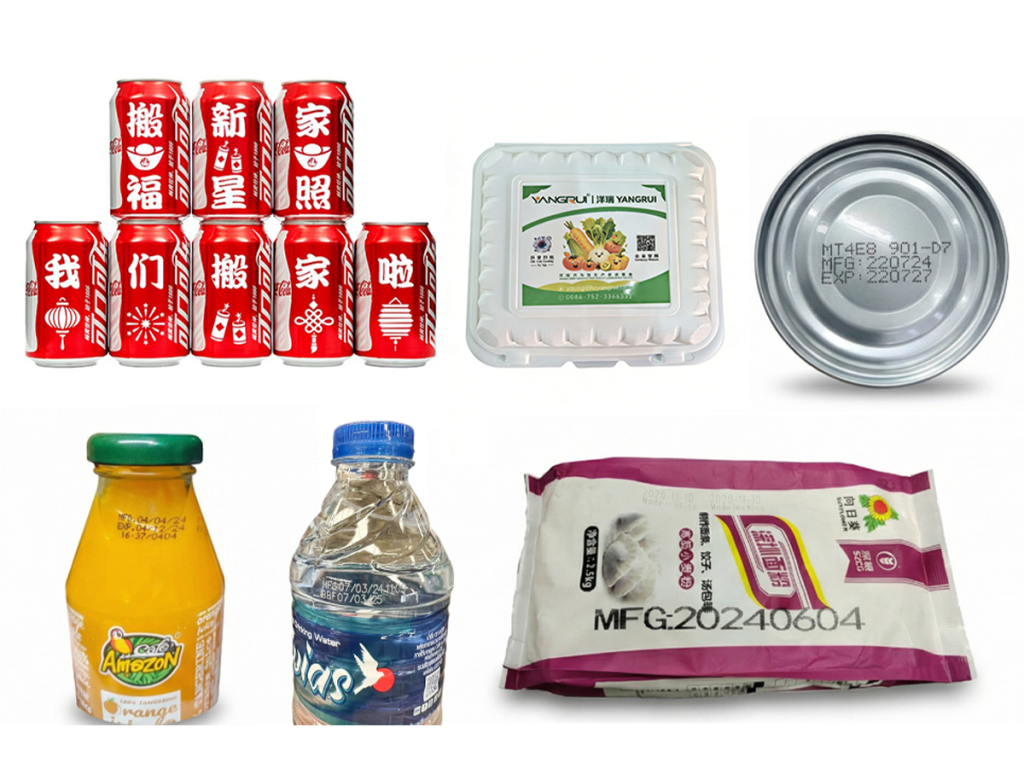
The applications of coding and marking in the food and beverage industry are essential for product safety, regulatory compliance, supply chain efficiency, and brand protection. These systems apply critical information to products and packaging at every stage of the production line.
Primary Applications
1. Product Traceability and Recalls
This is the single most critical application, directly related to consumer safety.
Batch/Lot Codes:
Unique identifiers applied to every product run, allowing a manufacturer to trace an item back to the exact time, location, and materials used during production.
Traceability Lot Codes (TLCs):
In the U.S., the FDA’s Food Traceability Final Rule (FSMA Section 204) mandates the use of TLCs for specific high-risk foods (like seafood, soft cheeses, and leafy greens) to enable rapid and effective tracing during a public health emergency.
Recall Efficiency:
In the event of contamination or a quality issue, the codes allow the company to quickly identify and remove only the affected batches from the supply chain, minimizing the scope of the recall, reducing food waste, and protecting consumer health.
2. Consumer Safety and Expiry Information
This fulfills the basic regulatory requirement of informing the consumer about the product’s safety and ingredients.
Date Coding:
- Best Before/Best if Used By: A quality indicator, informing the consumer when the product will be at its peak quality.
- Use-By/Expiration Date: A safety indicator for perishable goods (like dairy or meat), informing the consumer of the last date the food is safe to consume.
- Manufacture/Pack Date: Indicates when the product was produced.
Allergen Warnings:
Clearly marking packaging with required allergen declarations to prevent severe allergic reactions.
Nutritional Information:
Printing variable data such as nutritional facts, ingredient lists, and net weight, which can change based on the specific product variant or recipe.
3. Supply Chain and Inventory Management
Accurate codes are vital for automated logistics and operational efficiency.
Barcodes (UPC/EAN):
Universally used for point-of-sale scanning and inventory tracking within retail systems.
QR Codes/Data Matrix Codes:
Applied to primary packaging, cases, and pallets to store a large amount of data (e.g., website link, nutritional data, TLC) in a small space, enabling sophisticated inventory rotation (First-In, First-Out, or FIFO) and warehouse management.
Case/Carton Coding:
Applying large, readable codes (often through Large Character Inkjet or High-Resolution Piezo Inkjet) onto corrugated boxes for external logistics, stacking, and shipment identification.
4. Brand Protection and Marketing
Coding can be used for consumer engagement and fighting counterfeiting.
Anti-Counterfeiting:
Using covert marks (e.g., UV-visible or special security inks) or indelible laser etching to prove product authenticity, which is especially important for high-value beverages like spirits, wine, and certain luxury foods.
Customization and Promotions:
Printing variable promotional codes, unique serial numbers for sweepstakes, or even personalized messages (like “Share a Coke” campaigns) directly onto the packaging to boost consumer engagement.
Common Marking Technologies Used
The choice of technology depends on the packaging material, line speed, and environment (e.g., wet, dusty).
| Technology | Application | Best For |
| Continuous Inkjet (CIJ) | Non-contact application of small codes (date, lot) | High-speed lines, various materials (bottles, cans, flexible film), humid environments. |
| Laser Coders | Permanent etching of codes and graphics | Glass, PET bottles, metal, and certain plastics; ideal for high-quality, permanent marks. |
| Thermal Transfer Overprinting (TTO) | High-resolution printing onto flexible film packaging | Flow-wraps, sachets, flexible pouches, and labels (e.g., snack bags). |
| Thermal Inkjet (TIJ) | High-resolution, crisp text and barcodes | Porous materials like cardboard cases and cartons; suitable for slower to medium speeds. |