



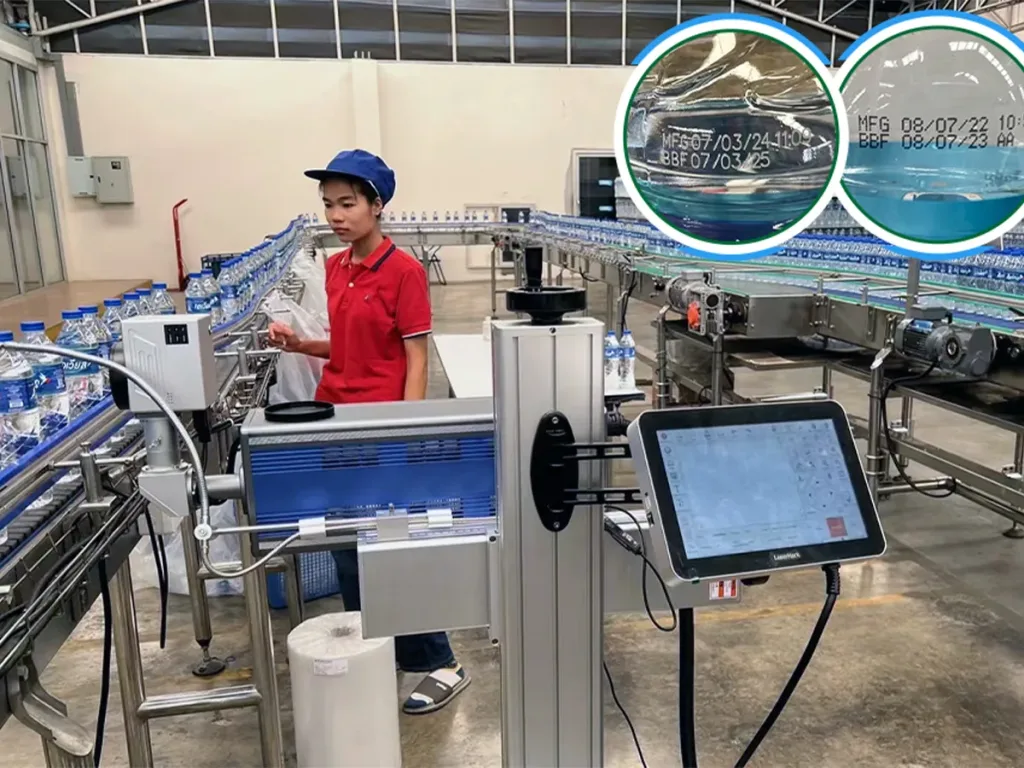
There are two primary technologies for coding on PET packaging, continuous inkjet printing and CO2 laser marking. The choice between them largely depends on the required permanence, cost of consumables, and the production environment (e.g., condensation, high speed).
Polyethylene terephthalate (PET) has long been used as a liquid container in the carbonated soft drink, bottled water, energy and fruit drinks markets due to its inherent properties of strength, flexibility and transparency. Additionally, PET bottles are gaining popularity over materials like HDPE for packaging consumer products such as shampoo.
Our continuous inkjet printers (CIJ) provide accurate, non-contact printing, even on the irregular shapes of PET bottles and containers. The selection of inks includes fast-dry, removable, high-contrast, food-safe, and condensation penetrating — all designed for our range of CIJ printers and to meet your code, speed, and production requirements.
When laser marking on plastic, particularly PET bottles, a CO2 laser can deliver a unique interaction with the plastic surface. This interaction yields a frosted effect on a bottle or container to produce visible, permanent codes. Choosing the right laser requires matching the laser wavelength to the PET’s thickness. To make this match, we help evaluate substrates, provide marked samples, and make recommendations to meet code and speed requirements. Our application expertise in printing on PET bottles spans many years and includes ultra high-speed solution of 80,000 bottles water per hour.